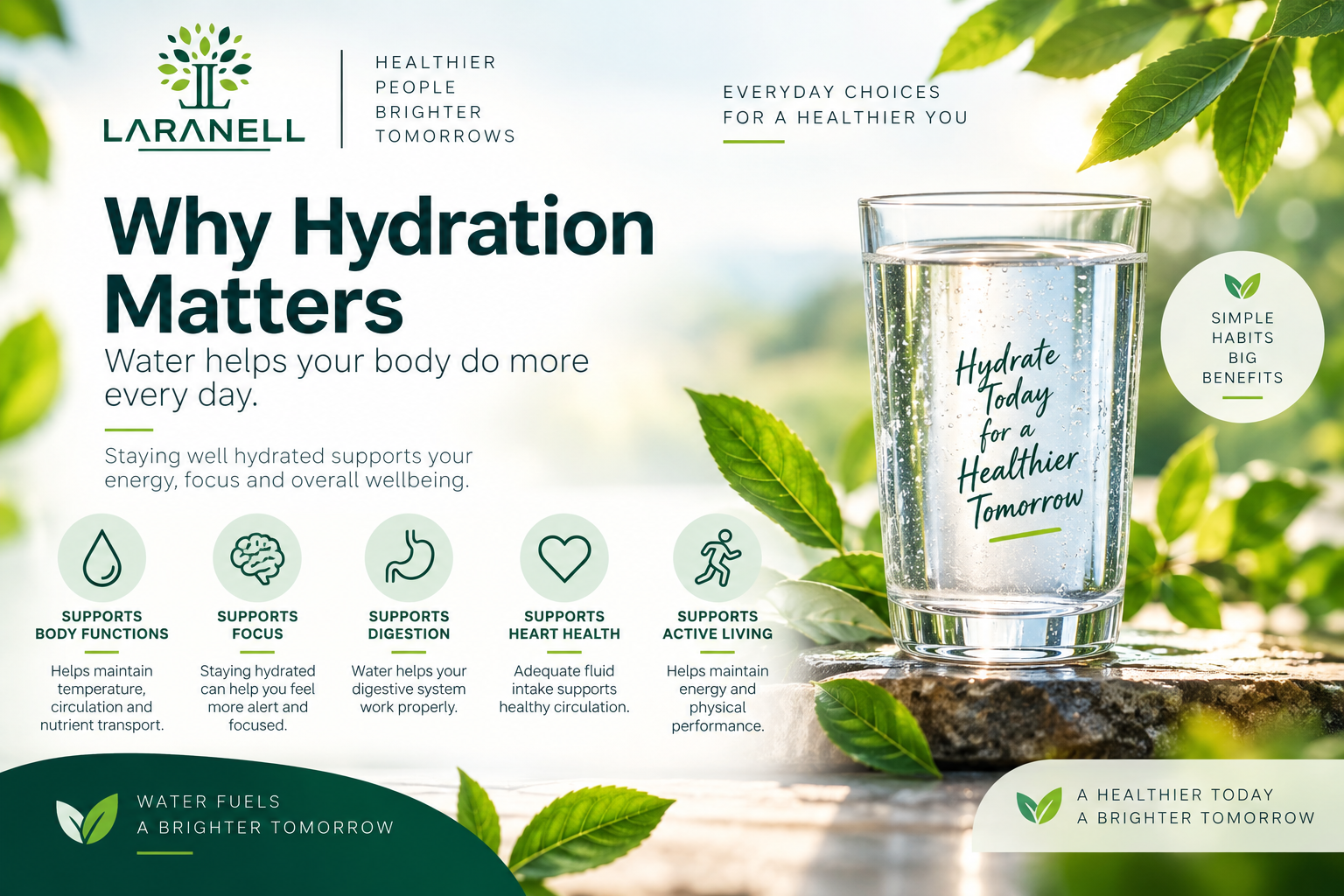
Water is essential for normal functioning of the human body. It contributes to many everyday physiological processes, including temperature regulation, digestion, circulation and the transport of nutrients.
Why Is Hydration Important?
The body continuously loses water through normal processes such as breathing, sweating and urination. Replacing these fluids helps maintain normal body functions.
Adequate hydration supports several important processes in the body, including:
•Regulation of body temperature
•Normal digestion
•Transportation of nutrients
•Normal physical performance
•Maintenance of normal body functions
Recognising Thirst and Fluid Needs
Thirst is one of the body's natural signals that fluid may be needed. Fluid requirements, however, can vary from person to person.
Factors such as physical activity, environmental temperature, age, diet, pregnancy, breastfeeding and certain health conditions can influence individual fluid needs.
Simple Ways to Support Healthy Hydration
Building practical habits can make regular fluid intake easier.
•Keep drinking water accessible during the day.
•Consider drinking water with meals.
•Increase attention to hydration during physical activity or hot weather.
•Include foods with a high water content as part of a balanced diet.
•Pay attention to thirst and other signals from your body.
Water is generally an appropriate choice for everyday hydration for most healthy people.
Individual Needs Matter
There is no single amount of water that is appropriate for every person in every situation. Individual requirements can differ considerably.
People who have medical conditions affecting the kidneys, heart or fluid balance, or who have been advised to restrict fluid intake, should follow the recommendations provided by their healthcare professional.
A Small Everyday Habit
Healthy living is often supported by consistent everyday habits. Making adequate hydration part of a balanced lifestyle can contribute to overall health and wellbeing.
For personalised guidance about fluid intake, particularly when a medical condition is present, consult a qualified healthcare professional.
References & Sources
World Health Organization (WHO) — Drinking-water and health information.
National Academies of Sciences, Engineering, and Medicine — Dietary Reference Intakes for Water, Potassium, Sodium, Chloride, and Sulfate.
National Health Service (NHS) — Water, drinks and hydration guidance.
This content is provided for general health awareness and educational purposes only. It is not intended to replace professional medical advice, diagnosis or treatment. Consult a qualified healthcare professional for personal medical concerns.